


Rethinking Customer Support with Intelligent Customer Interactions: An Interview with a Data Scientist
Nowadays, people expect quick, accurate, and personalized responses, whether they’re sending an email, calling a helpdesk, or starting a chat on a website. Meeting these expectations at scale can be challenging, especially in industries that handle thousands of inquiries every day.
In this blog interview, we speak with Luc Bams, a Data Scientist who uses AI and analytics to help organizations improve their customer interactions. From detecting intent, sentiment, and urgency to automating routine inquiries and equipping human agents with the right insights, Luc shares how data-driven solutions can make every touchpoint more effective.
This blog interview reveals how AI can shift customer service from reactive problem-solving to proactive, insight-driven engagement, without losing the human touch. Let’s explore Luc’s perspective on making customer interactions smarter, faster, and more personal.
Q: How would you define “Intelligent Customer Interactions” from a data science perspective?
For me, Intelligent Customer Interaction is about using AI and analytics to understand, predict, and improve the way organizations engage with customers across all channels. It’s not just about automation, it’s about making every touchpoint smarter by using data.
We make use of historical interaction data, such as call transcripts, emails, and chat logs, to train models that can detect intent, sentiment, urgency, and context. These models then help direct questions to the right agent, suggest good responses, or even resolve routine requests automatically. And the great thing is, these systems also learn continuously through feedback loops. Every agent correction, every outcome, every new type of question strengthens the model’s future performance.

The goal is to provide quick, consistent, and personalized service at scale for routine inquiries, while also giving human agents the tools and context they need to focus on complex, high-value interactions. In short, Intelligent Customer Interactions uses data science to transform reactive customer service into a proactive insight-driven, and scalable process.
Q: In your experience as a Data Scientist, which industries benefit most from Intelligent Customer Interaction solutions, and what are the typical challenges they face?
I see the biggest impact in industries with high-volume, complex, and often regulated customer contact. Think about industries like insurance, healthcare, telecom, and banking. They’re handling thousands of inquiries a day.
The challenges are pretty consistent across sectors. Oftentimes, their systems are fragmented, making it hard for agents to see the full customer story. Scaling is another big hurdle as you can’t always simply add more people, because training takes time, and turnover can be high. And of course, there’s the compliance angle. Any AI solution has to be rock-solid on data privacy, security, and transparency. GDPR, industry-specific rules, and ethical AI standards all come into play.
When you solve these issues with Intelligent Customer Interactions, the transformation is huge. You move from firefighting problems as they pop up to delivering fast, consistent, and proactive service.

Q: Can you share a real-life case where AI-driven customer interaction significantly improved service quality or customer satisfaction?
Absolutely! I once worked on a project for one of Europe’s largest parking operators, who wanted to better understand why customers were calling and address issues before they escalated. Our team built an AI-powered classification pipeline using Natural Language Processing (NLP) and machine learning, covering calls from four different countries.
This solution provided clear insights into the main call drivers, enabling the company to tackle root causes, lower call volumes, and quickly identify potential problems at specific facilities. The solution led to improved customer experience while cutting operational costs.
Q: What data is typically needed to develop effective AI solutions for customer engagement?
To build effective AI solutions for customer engagement, you typically need three types of data. First, there’s historical interaction data, things like emails, chat logs, or call transcripts. This teaches the AI how customers communicate, what they’re asking for, and how agents usually respond. Second, we use contextual data from CRM or service platforms to make sure the AI’s answers are not just correct, but also relevant to the situation. And third, we rely on feedback from agent corrections, which helps the system keep learning and improving over time.
The more complete and well-structured this data is, the better AI can deliver responses that are accurate and relevant.
Q: What mindset shifts are essential within organizations to successfully implement and sustain AI tools for customer interaction?
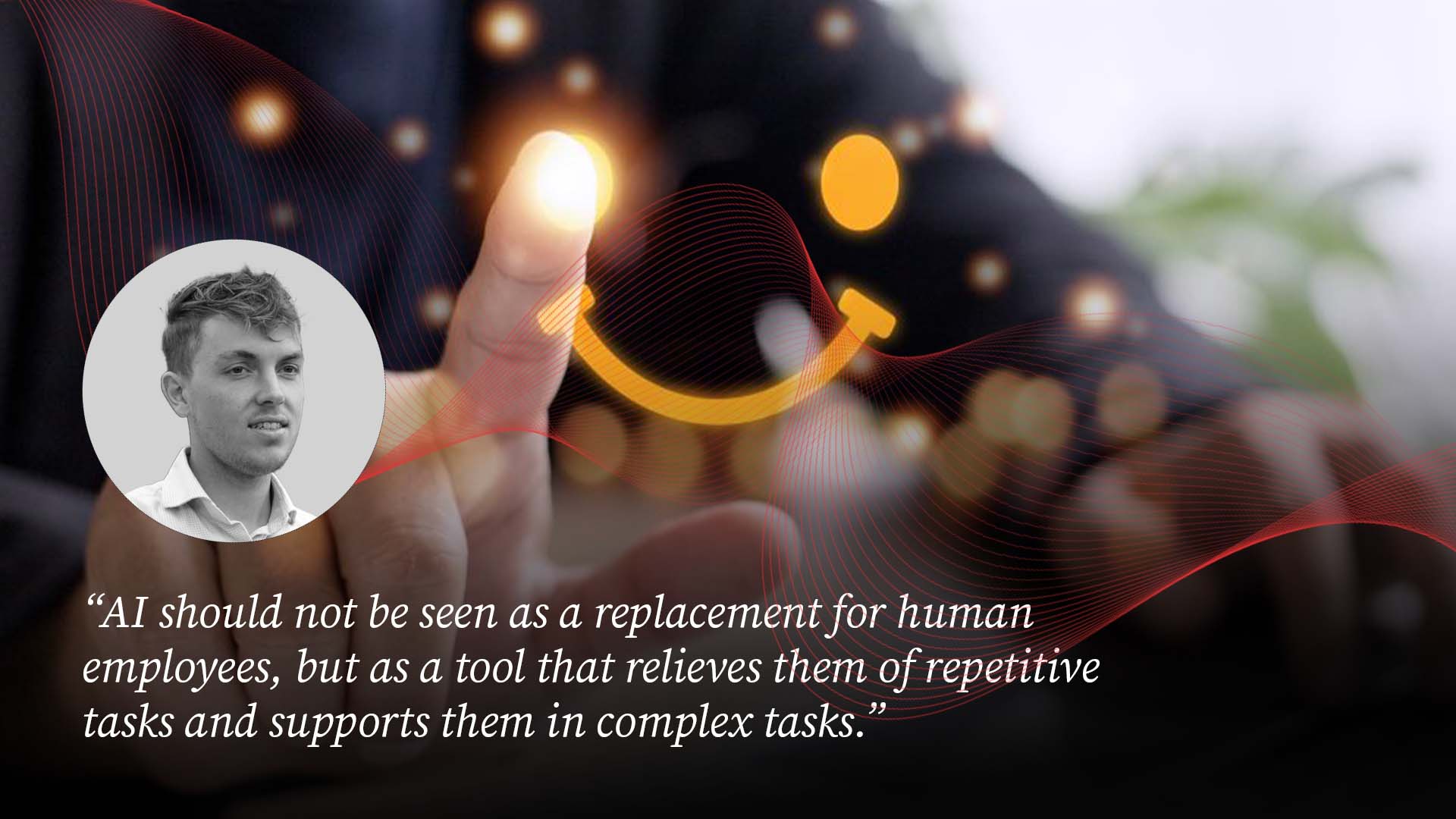
Whether a shift is necessary depends on the situation, but I would say that the key mindset is collaboration between people and technology. AI should not be seen as a replacement for human employees, but as a tool that relieves them of repetitive tasks and supports them in complex tasks.
I do find a mindset of continuous improvement necessary. AI solutions should not be viewed as one-off projects, but rather as something that learns and evolves through feedback. The best results are achieved when teams are curious and willing to experiment, and are prepared to make adjustments based on real-world use.
Last but not least, keep the customer-centric mindset. The end goal isn’t just efficiency. It’s about making sure the customer feels heard, supported, and valued in every interaction.
Q: When resources are limited, how do you recommend companies decide where to start with AI in customer interaction?
It’s best to start where AI can create the most value with the least complexity. While the exact starting point will vary for each organization, it’s often found in high-volume, repetitive tasks, things like handling routine customer inquiries, answering frequently asked questions, or summarizing interactions. These use cases are typically low-risk, quick to implement, and easy to measure, which means you can see tangible results fast. Those early wins not only improve efficiency but also help build confidence in AI across the organization, paving the way for tackling more complex challenges later on.
Q: How can companies ensure their use of AI in customer interactions remains ethical, explainable, and aligned with data privacy regulations?
Ethics and compliance need to be part of the foundation from day one. That means building with privacy by design: anonymizing data where possible, controlling and limiting access, and ensuring GDPR and other regulatory requirements are met from the start. It’s also about transparency, being clear about how the AI works, what it does, and why it makes certain recommendations. And for complex or sensitive situations, keeping humans in the loop is essential. This combination of privacy, transparency, and human oversight is what turns AI from a black box into a trustworthy, effective partner for customer interaction.
Q: What’s your take on Emotion-Aware AI, do you see it as a meaningful next step in understanding and enhancing customer experience?
It’s an interesting next step, but I think many organizations still have plenty of untapped value in the basics. Think of automating routing, centralizing knowledge, and giving agents better real-time insights.
Once those fundamentals are in place, emotion detection can add another layer, spotting frustration or delight and adapting the response in real time. For me, it’s a nice-to-have rather than the first priority.
The verdict
This interview makes one thing clear: AI in customer interaction is not about replacing people, but about empowering them. Luc emphasizes that the real transformation happens when organizations blend technology with a customer-first mindset, starting with simple, high-impact use cases and building trust through transparency, privacy, and ethical design.
By following this approach, companies can not only meet rising expectations but also anticipate customer needs, reduce operational strain, and strengthen loyalty. As our expert points out, the most successful Intelligent Customer Interaction strategies are those that keep evolving, just like the customers’ needs.
Ready to get started with smart customer support? Let our team help you! Together, we’ll unlock the potential of data and AI to generate Intelligent Customer Interactions for your organization!