



The AI Reality of 2026: From Experimentation to Intelligent Operations
Forget the endless lists of AI trends. The real story isn’t about what’s next, it’s about what’s already changing. In 2025, many organizations focused on copilots and chatbots. By 2026, the focus will shift toward intelligent systems capable of reasoning, planning, and taking action across tools and data sources.
According to Gartner, by 2026, 40% of enterprise applications will include task-specific AI agents, compared to less than 5% in 2025. The real shift isn’t just technological. It’s organizational. Companies are moving from isolated pilots to connected systems that combine automation, analytics, and autonomy.
Below are four key developments shaping AI in 2026 and what they mean for both technical experts and business leaders.
1. The Rise of Agentic AI: From Tools to Teammates
Agentic AI brings together large language models (LLMs) with planning, retrieval, and orchestration layers, enabling them to perform multi-step reasoning and trigger real-world actions.
In practice, this means AI can automatically adjust supply chains based on demand data, or handle customer support tickets by combining insights from emails, chat logs, and databases.
Many organizations are now forming dedicated AgentOps teams. These teams oversee training, observability, version control, and ethical governance of intelligent agents. AgentOps brings together elements from MLOps, prompt engineering, and reinforcement learning with human feedback.

| Feature | Traditional Automation | Agentic AI (2026) |
|---|---|---|
| Task Handling | Follows predefined rules | Decomposes and executes goals dynamically |
| Adaptability | Limited flexibility | Learns and improves continously |
| System reach | Single process or tool | Connects multiple platforms and APIs |
| Collaboration | Human oversight | Human-AI teamwork |
| Governance | Managed by IT | Overseen by AgentOps teams (AI observability, ethics, alignment) |
2. Multimodal AI Becomes Standard
Modern AI systems now process multiple data types simultaneously like text, audio, images, and sensor data, enabling more complete context understanding. Here are some of the examples:
| Industry | Data Type Combined | Description |
|---|---|---|
| Healthcare | Medical images, patient records, clinical notes | AI models combine visual scans (like X-rays or MRIs) with patient history and text reports to identify diseases faster and more accurately. |
| Retail &
E-commerce |
Product images, text descriptions, customer queries | Customers can upload a photo or describe a product; the AI matches it to catalog images and metadata for better discovery. |
| Manufacturing | Sensor data, images, acoustic signals | Multimodal systems analyze vibration, temperature, and visual data to detect early signs of equipment failure. |
| Logistics & Supply Chain | Video feeds, IoT sensor data, tracking logs | AI merges live video and sensor data with shipment information to detect delays or damage automatically. |
To support these applications, many organizations are adopting unified data architectures such as Microsoft Fabric or Databricks. These platforms help connect structured (database) and unstructured data (emails, chat logs, images, video, etc.) streams.
3. AI Governance and Sovereignty: Trust as a Design Principle
As AI systems become more autonomous, trust must be designed into every part of the process. This includes how data is collected, how models are trained, and how they are deployed.
With the EU AI Act taking effect, many organizations are rethinking their AI architectures. They must demonstrate transparency, risk classification, and traceability for every model. This has led to growing interest in the concept of Sovereign AI, where companies localize their data, hosting, and compute infrastructure to comply with regional laws and reduce dependency on external providers.
Regional AI hubs are expected to grow across Europe, combining model registries, vector databases, and audit pipelines that support regulatory compliance. Organizations that can integrate governance directly into their AI lifecycle will turn compliance into a strength rather than a constraint.
| Aspect | Advantages | Challenges |
|---|---|---|
| Data Localization | Strong compliance and data control | Higher infrastructure costs |
| Transparency | Easier audits and traceability | Complex model documentation |
| Independence | Reduces vendor lock-in | Risk of slower innovation |
| Security | Greater protection of sensitive data | Multi-region management complexity |
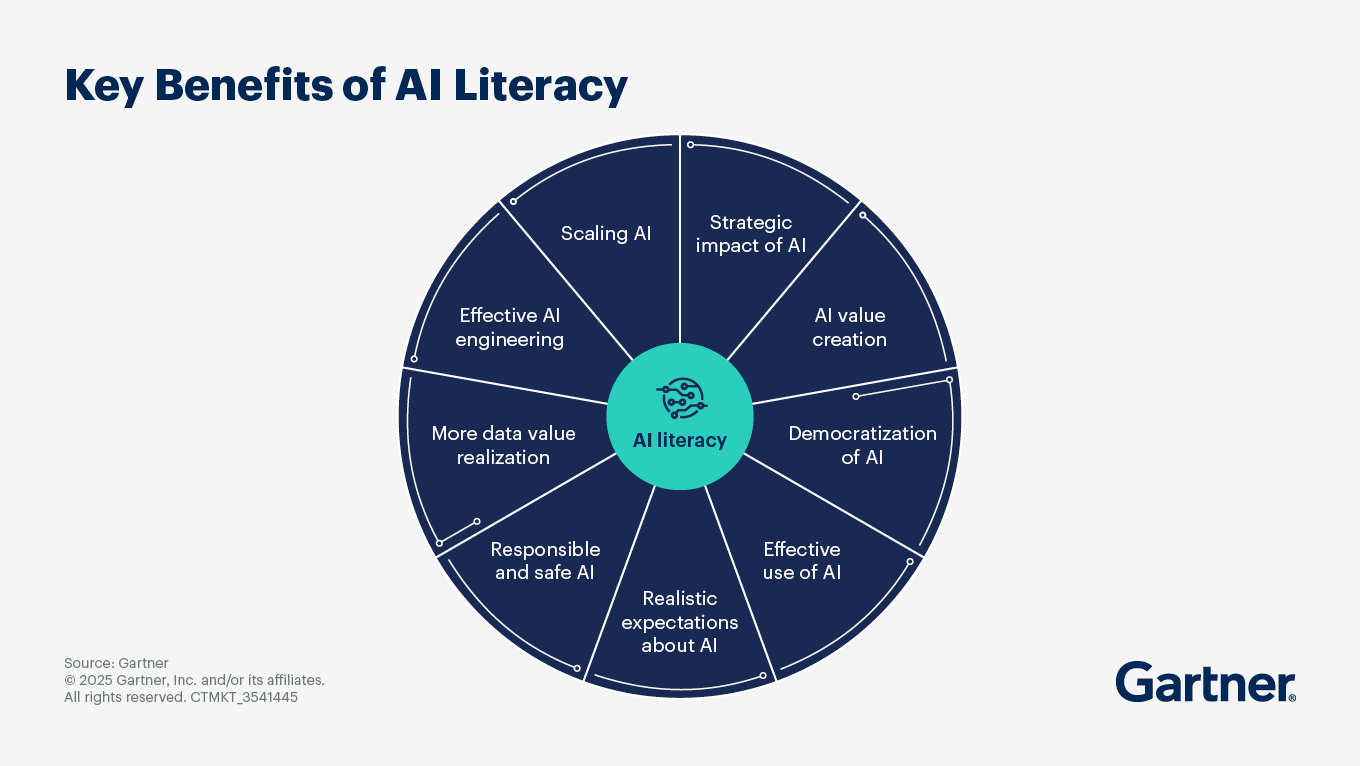
4. The Human Shift: AI Literacy as a Core Skill
AI transformation is as much about people as it is about technology. Data engineers, analysts, and business leaders now work side by side to interpret insights, validate outputs, and connect them to real outcomes.
According to PwC, professionals with advanced AI skills earn on average 56% more than their peers. This reflects a growing demand for people who understand prompt design, data ethics, and AI interpretability.
Organizations are investing in AI literacy and reskilling programs to help employees work effectively with intelligent systems. This includes learning how to validate model outputs, ensure responsible use, and connect AI insights to measurable business outcomes.
The aim is not to replace human talent but to strengthen it by integrating AI as a trusted collaborator.
Conclusion
By 2026, AI will be an embedded part of everyday work, integrated into workflows, products, and decisions across every team. To prepare for this, organizations should focus on three priorities:
Build resilient AI ecosystems. Integrate data, models, and governance within a unified strategy.
Design for transparency. Include explainability, monitoring, and compliance as part of the system from the beginning.
Empower people. Treat AI as a skill advantage that enhances the workforce rather than a technology that replaces it.
At Conclusion Intelligence, we believe the future of AI lies in amplifying human expertise. The combination of technical innovation and responsible use will define how organizations transform decision-making, operations, and innovation in the years ahead.
Ready to move from AI experimentation to enterprise intelligence? Let’s explore how our experts can help you design, build, and scale AI solutions that create real business impact.
Get in touch with us to start your AI transformation journey!