


From Data to Action: Implementing Agentic AI with Microsoft Fabric and Microsoft Foundry
Agentic AI is becoming the big hype right now, but unlike many tech hypes, this one has solid reasons behind it. We’re moving from systems that go beyond answering questions to systems that act. But real-world agentic AI isn’t about hype or fully autonomous “AI workers.” It’s about building reliable, well-governed assistants that operate safely within your business environment.
This blog breaks down what agentic AI really means, why it’s useful, and how Microsoft Fabric and Microsoft Foundry provide a practical foundation for deploying it safely in enterprise environments.
What is Agentic AI?
Traditional AI models like chatbots or ML classifiers are reactive. You give an input, they give an output. Agentic AI, however, goes a step further. It can:
- Understand goals
- Analyze information
- Make decisions
- Take actions
- Collaborate with tools and systems
- Learn and improve over time
Think of it as an employee who can read your data, understand business rules, plan the next steps, and then actually do things, not just tell you what to do.
Examples
An agent that monitors sales data, predicts a slowdown, and alerts your manager.
An agent that pulls data from different sources, generates a report, and sends it automatically.
An agent that identifies anomalies in real-time manufacturing data and triggers maintenance workflows.
This active, autonomous nature is what makes Agentic AI such a powerful evolution.
Why Fabric + Microsoft Foundry is the best environment for Agentic AI
Agentic AI works well when two pillars are strong:
Your data foundation is clean, unified, governed, and accessible.
Your AI platform can orchestrate reasoning, decisions, and actions.
This is exactly where Microsoft Fabric and Microsoft Foundry work hand-in-hand.
1. Microsoft Fabric: The unified, enterprise-ready data backbone
Agentic AI is only as good as the data behind it. Fabric centralizes analytics, engineering, governance, and ML tooling into a single environment, making data easier to prepare and safer to use for AI agents.
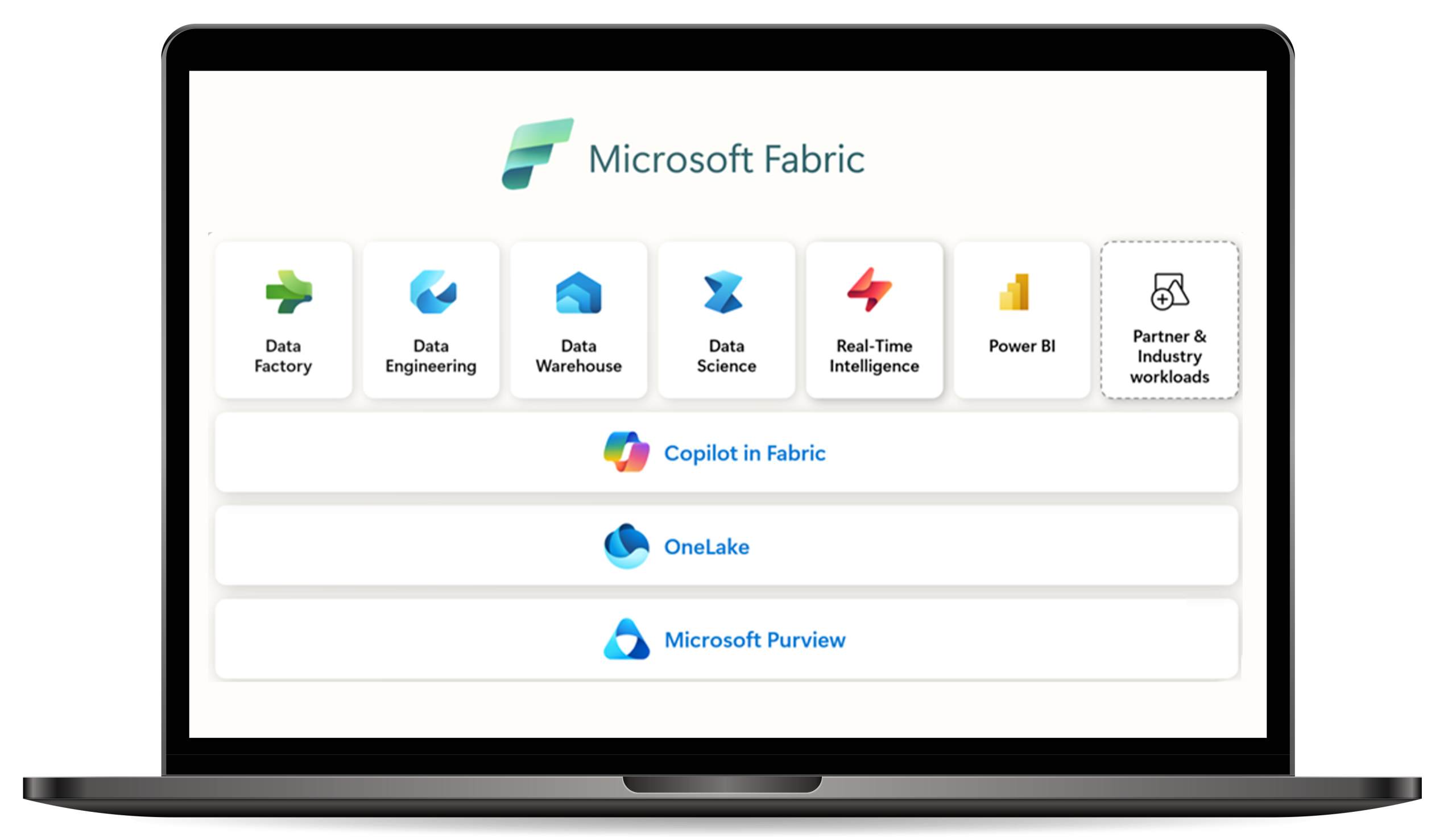
Why Fabric is perfect for Agentic AI:
- OneLake: One place for all your data. No more jumping between databases, lakes, and warehouses. Agents can access everything from one governed location.
- AI-ready data engineering & science. Built-in pipelines, notebooks, data models, and ML tooling ensure that data is cleaned, enriched, and ready to power intelligent behavior.
- Supports real-time and historical data. Agents can react instantly to live events or analyze long-term trends.
- Strong governance & security. Fabric keeps data access compliant and controlled, essential for enterprise-level AI behavior.
In short: Fabric becomes the “single source of truth”, the data backbone that powers reliable, relevant, and governable intelligence.
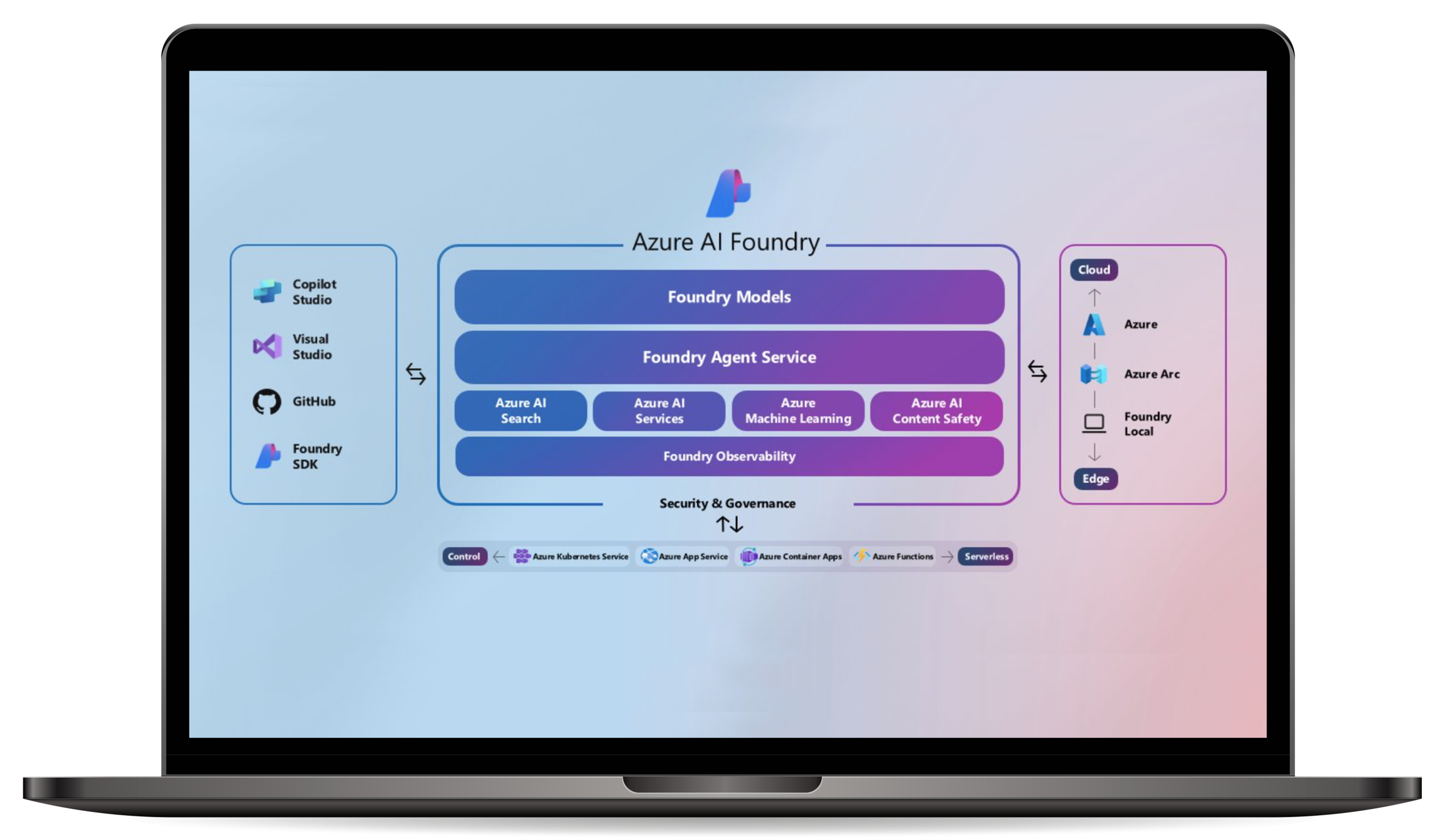
2. Microsoft Foundry: The intelligence & orchestration layer
Microsoft Foundry provides everything needed to build, customize, deploy, and observe agents.
Key capabilities include:
- Access to high-quality foundation models. From general LLMs to specialized ones, all managed with enterprise controls.
- Fine-tuning and RAG. Your agent can be grounded in Fabric data, reducing hallucinations and ensuring relevance.
- Tool calling and workflow orchestration. Agents can execute tasks, query Fabric, send alerts, update records, or trigger pipelines.
- Responsible AI, evaluation, and monitoring. So your agent behaves safely, predictably, and in line with compliance requirements.
When these platforms are connected, you get a seamless pipeline:
Source Systems → Fabric (Unify & Prepare Data) → Microsoft Foundry (Build Agent) → Intelligent Action
What this enables:
- Agents that give grounded, real-world answers
- Reduces hallucination risk
- Clear governance, auditing, and lifecycle management
- Rapid, iterative development without stitching technologies together
This combination drastically lowers the barrier to enterprise AI adoption.
Practical use cases emerging today
While agentic AI is early, many organizations are already experimenting with realistic, value-adding scenarios.
1. Conversational enterprise “insight agents”
Employees can ask a question like: “Show me monthly churn for Region West and explain the drop”. The agent retrieves Fabric data and responds in seconds.
2. Automated operations assistants
Agents that detect anomalies, forecast risks, notify stakeholders, and even trigger maintenance or workflow actions.
3. Compliance & documentation agents
Agents that read policies, monitor data access, and surface compliance issues, highly relevant for enterprise governance.
4. Multi-agent business systems
Specialists that collaborate: one retrieves data, another reasons, another executes actions.
Realistic considerations & what to watch out for
Because agentic AI is still new, and because these agents can act, decide, and access data, there are a few important considerations:
- Still early in development: Many Fabric and Microsoft Foundry agent features are new or in preview, so best practices and limitations are still evolving.
- Strong governance required: Agents that access data or trigger workflows must be tightly controlled. Security, compliance, monitoring, and clear access rules are essential.
- Requires skilled teams: Effective agentic AI needs more than an LLM. It requires expertise across data engineering, security, ML, and DevOps.
- Ethical and legal risks: More autonomy means greater responsibility. Organizations must address accountability, explainability, and the risk of unintended actions.
Closing thoughts
Agentic AI won’t magically automate entire businesses, and it isn’t meant to. What it does offer is a structured, safe way to introduce intelligent automation using your existing data and systems.
Microsoft Fabric and Microsoft Foundry provide a realistic, enterprise-grade path forward: a unified data layer, a secure AI environment, and the governance needed to deploy agents responsibly.
For developers, analysts, and business teams, this stack creates an opportunity to move from isolated AI experiments to practical, action-oriented systems that support daily operations and long-term innovation.