


What You’re Missing in the Market: A Data Scientist’s Take on Turning Data into Market Insights
AI-powered Market Insights are becoming essential tools for organizations. Businesses rely on these insights to make smarter decisions and fuel sustainable growth. But as one of our AI experts, Bruno Lubascher, points out, there’s an important misconception: AI is not a silver bullet. It can reveal patterns, detect market changes, and highlight opportunities, but it doesn’t magically come up with a great strategy.
In this interview with Bruno, we dive into the lessons we’ve learned from real projects, such as our collaboration with dsm-firmenich. You’ll discover why starting small leads to big results, how even imperfect data can still yield useful insights, and why user-centric development is crucial for adoption. Most importantly, we explore what it takes to turn data into market intelligence!
Q: What’s the biggest misconception you hear the most about Market Insights?
As a data scientist working on many projects involving AI-driven Market Insights, I would say: „AI is going to solve all my problems“. That’s the biggest misconception I hear, and it’s misleading. Let’s say you’re researching a competitor who claims to be “better than everyone else.” AI-based Market Insights can help you gather and analyze those claims from various sources, but they won’t tell you how to outperform them. That’s the job of your marketing strategy, not AI.
Q: What is the biggest mistake companies make when trying to become data-driven?
It often starts with a one-person perspective. I’ve seen many data projects driven by a single stakeholder, one person defining what the end product should look like without involving the actual end users. The result? Poor adoption.
Instead of a push model („here’s your dashboard“), aim for a pull model where users are involved from the beginning. That way, the solution fits their needs, and they’ll be eager to use it.
Q: Let’s talk about the Market Insights solution you helped create for one of our clients, dsm-firmenich. What was the key challenge the business was facing and how did you help them?
dsm-firmenich is a global, purpose-driven company rooted in science, active in Nutrition, Health, and Sustainable Living. They supply raw materials to manufacturers that produce the everyday products we, as consumers, use. With over 20,000 employees across 50 countries, they use their scientific expertise and innovation to tackle some of the world’s biggest challenges.
Now, as you can imagine, operating at this scale means dealing with a huge amount of data. One of their key challenges was that they didn’t have a clear picture of their „share of wallet“. So, they wanted to figure out which customers saw them as a preferred supplier, and where there was still untapped potential. They also wanted to identify new customers who could benefit from their products but weren’t yet doing so.
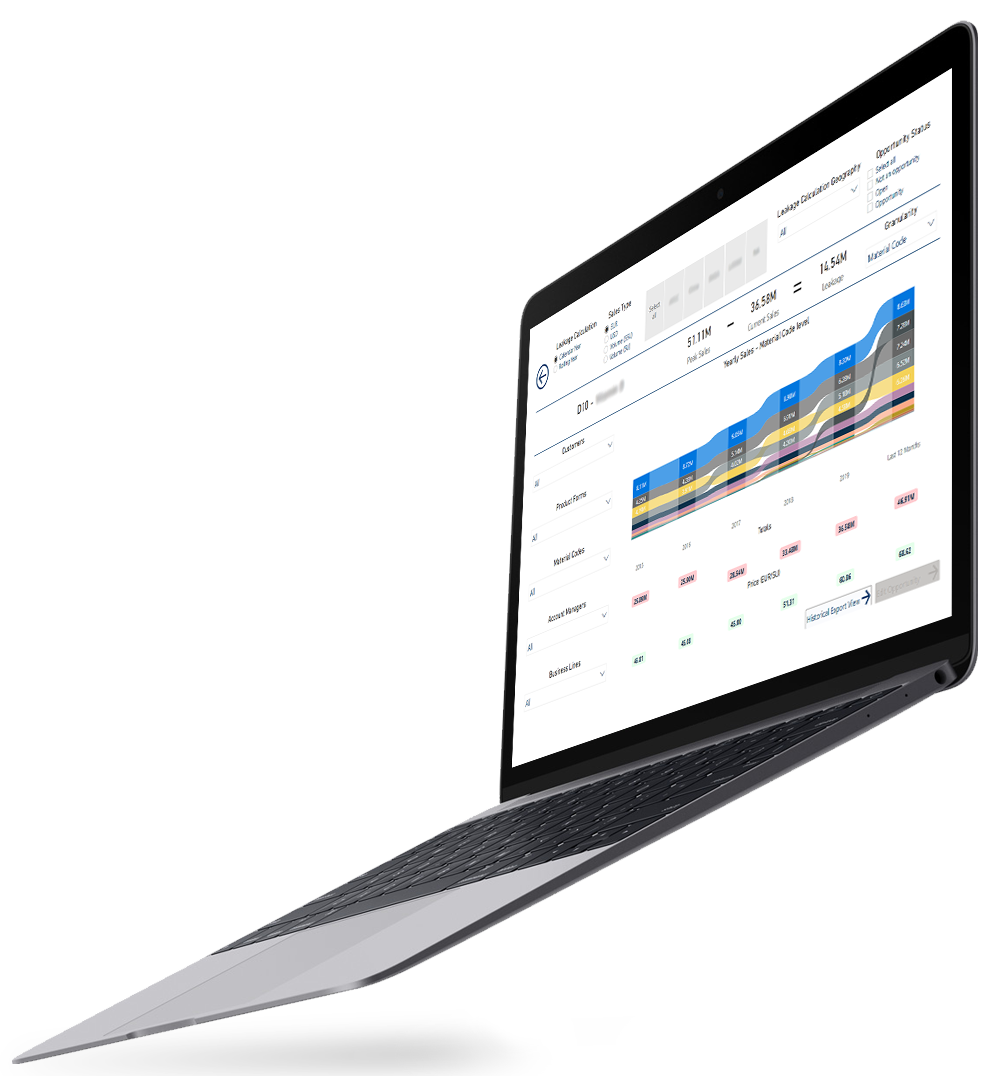
In just a couple of weeks, we built a dashboard that helped bring all of this into focus. It gave them a clear view of how much business they were winning versus what was going on with the competitors. The dashboard didn’t just highlight key customers, it also uncovered growth opportunities, showing where their products weren’t being fully used yet and where their sales teams could take action.
Q: Were there other insights that the solution revealed, that dsm-firmenich couldn’t see before?
So, dsm-firmenich is basically a B2B2C company. Before, they could only see how other businesses were buying from them (B2B). But now, they also understand what happens after that, how those businesses use or sell their products to end customers.
It’s like before they only saw who was buying from them, but now they can also see how their products are being used or sold further down the line, all the way to the final consumer. This gives them a much more complete picture of their impact and where new opportunities might be.

Q: This initial project led to other, larger projects within dsm-firmenich. Why is this first project a good example of how you can start small and gain more Market Insights over time?
Yes, that first project really laid the foundation. We started small and delivered results in just a short period of time, it was very much a step-by-step journey. In that first phase, we focused on understanding where the market was growing. Now, in our follow-up projects, we’re helping the business figure out where customers are actually willing to invest. Using those insights, we’re also building a solution that uses AI to adjust pricing and margins based on real market signals. It wasn’t an overnight transformation, we went from raw insights to taking actions through a clear, iterative process.
Q: Some companies hesitate because they think their data is too scattered or incomplete. In your experience, can businesses without perfect data still create meaningful Market Insights?
Absolutely! You don’t need to have perfect data right away to get started. That said, using high-quality data does make a big difference.
But you can always start small. Instead of focusing on your entire company, you can choose one domain, one business unit. You can enrich internal data with external sources (for example, by scraping data or purchasing data from third parties). Nowadays, AI-based tools can convert unstructured data into structured formats, which is especially useful for companies with manual or paper-based processes.
Q: Do companies need a large internal data team to do this?
Not at all! You can start with a Proof of Concept (PoC), even a single dashboard can deliver valuable insights. Take the use case at dsm-firmenich as an example! Of course, as you scale up and involve more departments, you may need more resources. But the key is to start small, show value, and build from there.
Q: What would you say to businesses hesitant to invest in Market Insights?
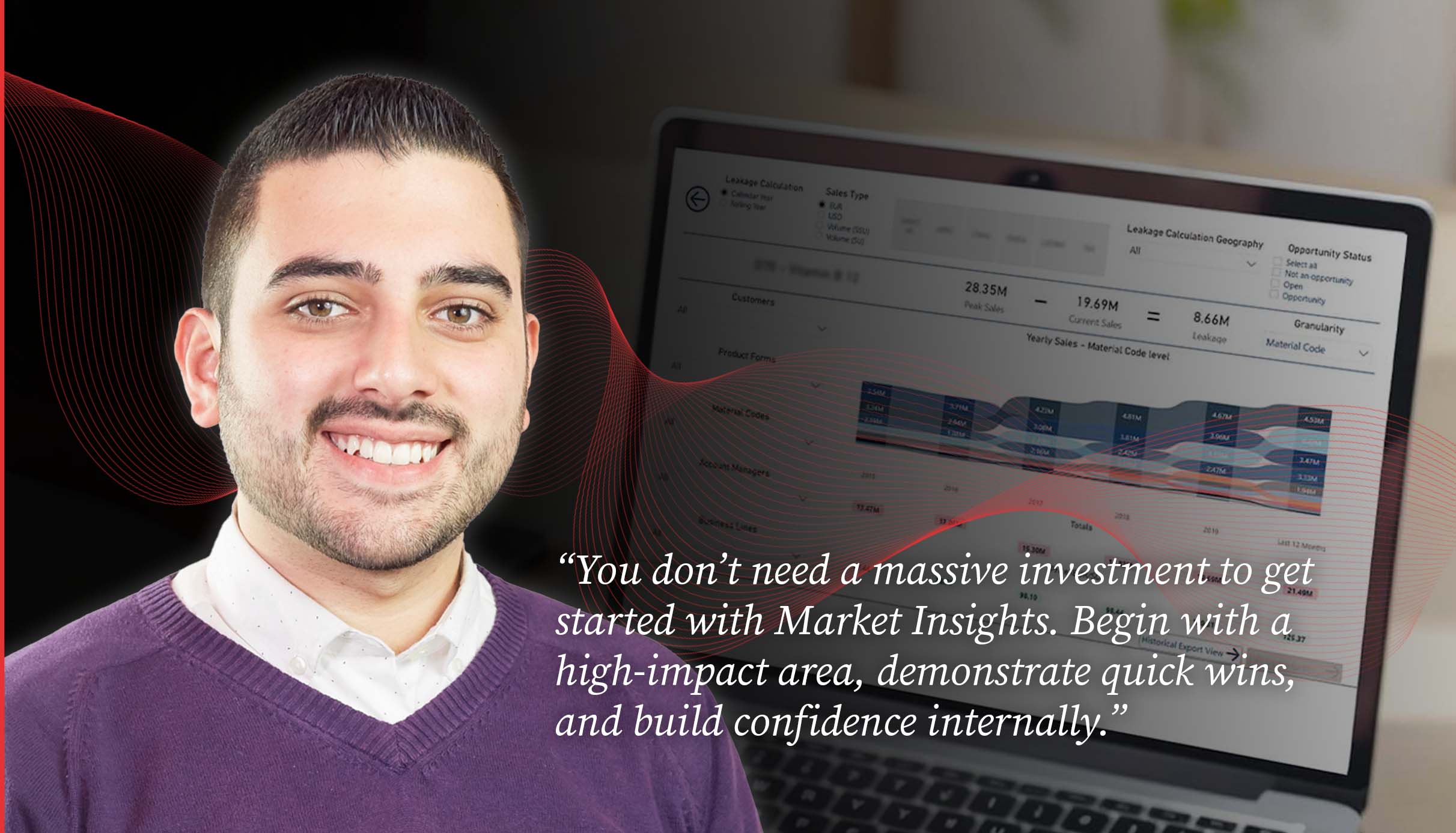
It’s good to start asking yourself: „Where are my low-hanging fruits?“. Of course, every investment has a risk, however you can minimize your risk. You don’t need a massive investment to get started. Begin with a high-impact area, demonstrate quick wins, and build confidence internally. If you don’t try, you’ll never find out!
Q: If a someone asks you, “Where do I start with Market Insights?” what would you say?
Start where it hurts, or where there’s untapped opportunity.
Look at areas where your team is making decisions with little or outdated information. That’s where insights will add the most value. From there, define a small project with clear business relevance. Don’t forget to involve the right stakeholders early in the process!
Q: How do you see market insight technologies evolving, and why act now?
Access to market data is exploding. Tools like ChatGPT let anyone ask anything and get instant responses. But here’s the thing: everyone has access to this public data. What sets you apart is when you combine public insights with your internal domain knowledge. Ask yourself: „Do you want to be a driver or a follower?“, „Do you want to react to trends or shape them?“. The companies acting today are the ones who’ll shape the market tomorrow.
The verdict
AI-driven Market Insights are not supposed to replace human decisions, they are meant to improve them. As this interview shows, successful initiatives based on insights start small, involve end users early on, and build momentum through quick wins and practical value.
Perfect data is not a requirement. Neither is a large internal team. The most important thing is a clear business question, a willingness to experiment, and the ability to turn findings into action!
Ready to get started with data-driven decisions? Let our team help you! Together, we’ll unlock the potential of data and AI to generate smarter Market Insights.