


OpenClaw: The Viral AI Agent Testing the Real Limits of Autonomy, Security & Trust
In early 2026, an open-source software project captured the imagination of developers, AI enthusiasts, and security professionals alike. Originally launched as Clawdbot, briefly renamed Moltbot, and now known as OpenClaw, this autonomous AI agent quickly went viral among developers, AI enthusiasts, and security professionals. Not because it was smarter than existing systems, but because it acted.
OpenClaw didn’t just answer questions. It took initiative, interacted with real systems, and operated continuously on a user’s behalf. Despite its capabilities, OpenClaw has sparked debate on social media, with some viewing the platform as a gimmick and others believing it foreshadows the future of AI autonomy and human-AI relations, for better or worse.
From smart autocomplete to real execution
For years, AI assistants like Siri and Alexa have been positioned as capable helpers, tools that would schedule meetings, manage inboxes, or take care of small but annoying tasks. In reality, they evolved into highly reliable command-and-control systems: great at setting timers, answering factual questions, or triggering predefined actions, but limited when things got messy or contextual.
Once a task required multiple steps, judgment calls, or interaction with unfamiliar interfaces, those assistants typically handed control back to the user or redirected them to a web search. The intelligence was there, but the agency was not.

OpenClaw represents a meaningful shift from that model. Instead of relying on hard-coded workflows or tightly scoped integrations, it combines a language model with persistent memory, system access, and long-running autonomy. It doesn’t just wait for a command. It can interpret intent, plan a sequence of actions, and execute them across tools and applications.
In that sense, OpenClaw feels less like a voice assistant and more like a digital coworker: imperfect, sometimes cautious, but capable of navigating real systems rather than just orchestrating predefined shortcuts.
What OpenClaw actually is
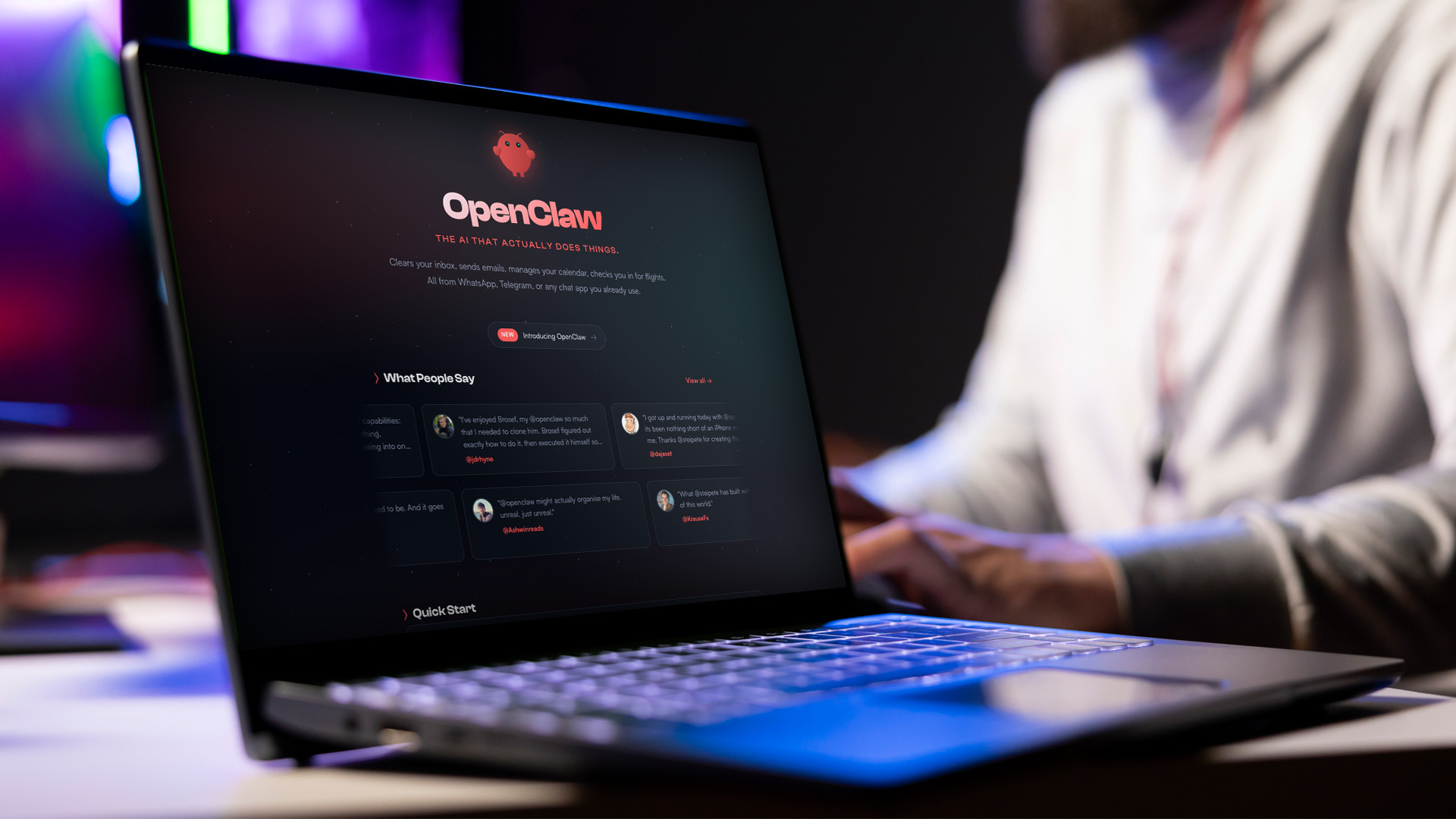
OpenClaw positions itself as “the AI that actually gets things done.” It can clear your inbox, send emails, manage your calendar, and even check you in for flights, all through chat apps you already use, such as WhatsApp, Telegram, or any other messaging platform.
OpenClaw was created by Peter Steinberger, an Austrian developer and entrepreneur with a solid track record in developer tooling. Importantly, the project is fully open source. There’s no proprietary black box, no forced cloud dependency, and no mandatory subscription model.
What OpenClaw offers:
- Runs on your own machine. Works on Mac, Windows, and Linux. Supports Anthropic, OpenAI, and local models.
- Works with any chat app. Use it via WhatsApp, Telegram, Discord, Slack, Signal, or iMessage. It works in both direct messages and group chats.
- Persistent memory. It remembers your preferences and context, making the AI truly yours.
- Browser control. Browse the web, fill out forms, and extract data from any website.
- Full system access. Read and write files, run shell commands, and execute scripts, fully unrestricted or sandboxed.
- Skills & plugins. Extend its capabilities with community-built skills or create your own. It can even generate new skills by itself.
OpenClaw vs traditional chatbots
While tools like ChatGPT or Claude are undeniably powerful, they remain fundamentally reactive. They respond to prompts, generate outputs, and then reset context when a session ends.
| Aspect | OpenClaw | ChatGPT |
|---|---|---|
| Core model | Autonomous AI agent | Conversational AI model |
| Main role | Takes actions & executes tasks | Generate text & answers |
| Autonomy | Can work independently | Always user-promted |
| Memory | Presistent | Session-based |
| System access | Direct (user-controlled) | None |
| Risk level | Higher | Lower |
This distinction matters. OpenClaw doesn’t just recommend actions, it performs them in real systems, over time, with memory. That’s powerful, and it’s also where things get complicated.
Rapid adoption
OpenClaw’s open-source nature accelerated adoption. Developers quickly began building integrations, extending capabilities, and adapting it to different workflows. The project has attracted over 145,000 GitHub stars and 20,000 forks. While stars don’t equal daily active users, they do signal strong interest across the AI and developer communities.
Early adoption appeared strongest in Silicon Valley, where agentic AI has become a major investment theme. From there, interest spread globally including China, where local cloud providers and AI companies are rapidly integrating autonomous capabilities into messaging, commerce, and payment platforms. OpenClaw can also be paired with non-Western language models and customized messaging integrations, making it flexible across ecosystems. Still, adoption has been uneven. Many users experiment briefly, then pull back, often citing concerns around security, reliability, and control.
A Governance & trust dilemma
OpenClaw didn’t just demonstrate what autonomous AI can do. It also exposed what we’re not yet ready for.
A glimpse of the future, handled carefully
OpenClaw is not the final form of autonomous AI. It’s an early, imperfect, and sometimes messy glimpse into what’s coming next. Its real contribution isn’t that it “solved” personal automation, but that it made the trade-offs visible. It showed what’s possible when AI moves from advice to action, and it forced the community to confront the realities of trust, control, responsibility, and the role of the human in the loop.
Used thoughtfully, tools like OpenClaw can unlock real productivity gains and more natural human-computer collaboration. Used carelessly, they can create risks we’re not yet equipped to manage. The future of agentic AI will likely belong to systems that balance capability with restraint, autonomy with meaningful human oversight, and innovation with governance.