


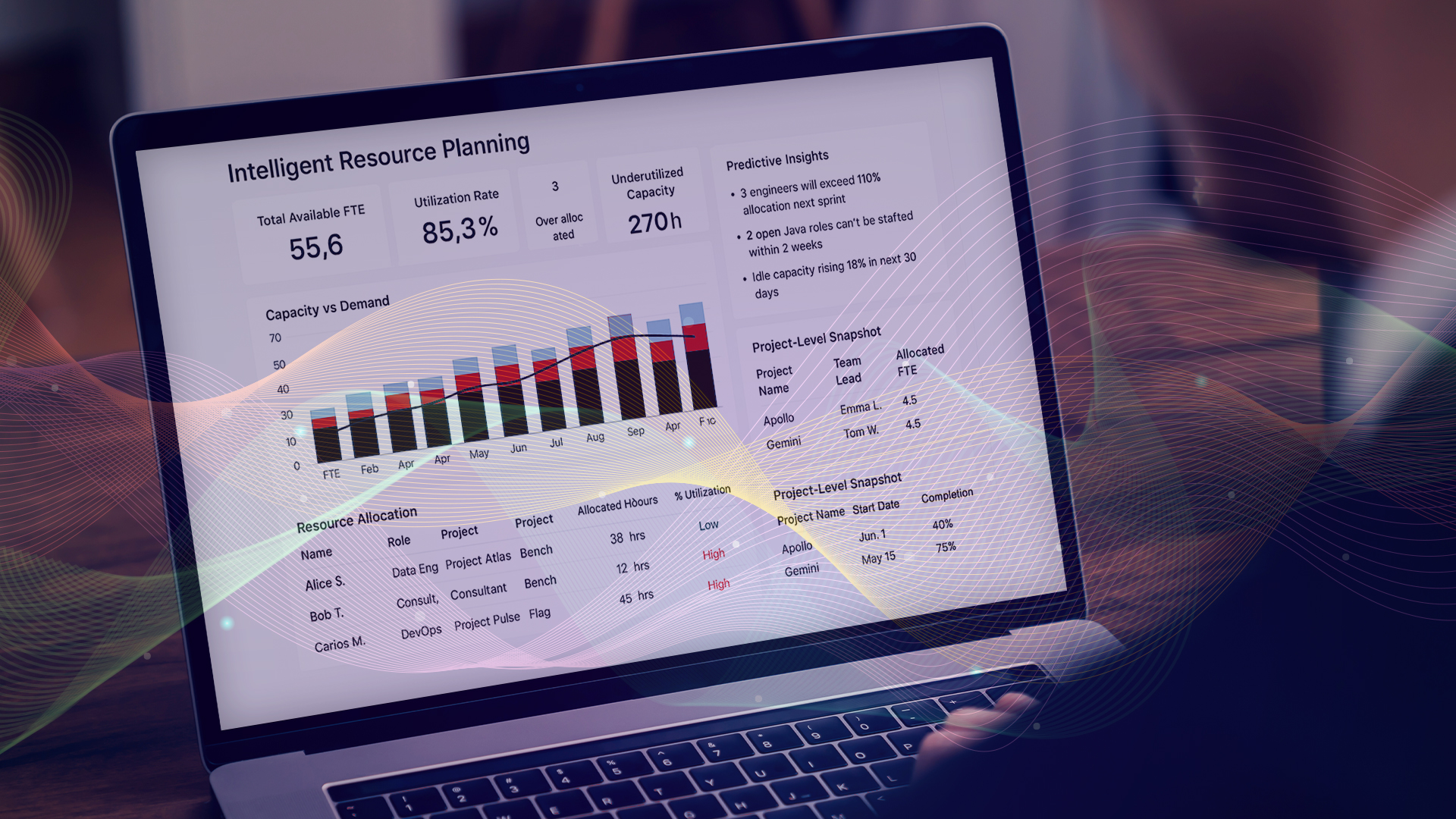
Intelligent Resource Planning: The Next Normal in Your Operations
From healthcare to manufacturing, aviation to logistics, organizations across industries that are dependent on specialist personnel and dynamic demand are increasingly under pressure to optimize resources and ensure that teams can deliver more with less. They find themselves asking the same questions: How can we get ahead of the curve? How do we move from crisis mode to controlled execution Resource planning has become one of their most complex and critical challenges. The answer lies in Intelligent Resource Planning (IRP) powered by AI, a proactive, data-driven approach that transforms how organizations allocate their staff, time, and other resources.
In this blog, we explore how AI revolutionizes resource planning, solve real-world pain points across industries, and offer practical steps to help your organization embrace this next normal.
Common pain points across industries
Balancing productivity and quality with efficient use of staff and resources remains a significant struggle. Across industries, several recurring challenges threaten operational efficiency and employee well-being:
- Staff are frequently overwhelmed by unexpected surges in demand, leading to burnout and high turnover.
- Teams are forced to make last-minute adjustments and manage crises, rather than operating efficiently with confidence in their planning and resource allocation.
- Strategic planning is often disrupted by uncertainty. This makes it challenging to address immediate operational requirements while also achieving long-term organizational objectives.
When capacity needs are unpredictable and resources scarce, organizations must shift from reactive to predictive planning. Many try to simulate best- and worst-case scenarios, but this often falls short without intelligent systems in place.
The role of AI in Intelligent Resource Planning
When integrated into resource management, AI helps identify underutilized assets, predict future demand, and automate routine decision-making. This not only improves day-to-day operations but also frees up time for teams to focus on strategic priorities and innovation. Here’s how AI addresses common resource planning challenges:
Real-life examples of AI-driven Intelligent Resource Planning
Use case: Anticipating patient admission in the emergency room (ER)
Industry: Healthcare
The Emergency Room (ER) at Zuyderland Medical Center is the hospital’s busiest department, treating patients with everything from strokes and heart attacks to general injuries and broken bones. Given the high-pressure environment, Zuyderland sought to improve its patient care using AI and machine learning.
To support this, an AI solution was developed that:
- Forecasts patient inflows every two weeks, taking into account variables such as weather conditions and holidays.
- Visualizes data through an easy-to-use dashboard to facilitate operational decisions.
Impact:
This solution helped Zuyderland allocate staff, beds, equipment, and medication more efficiently. The model maintained a daily prediction accuracy within 10% per care unit, ensuring that patients, regardless of severity, receive the right care at the right time.

Use case: Ensuring a long-term strategic workforce planning
Industry: Aviation
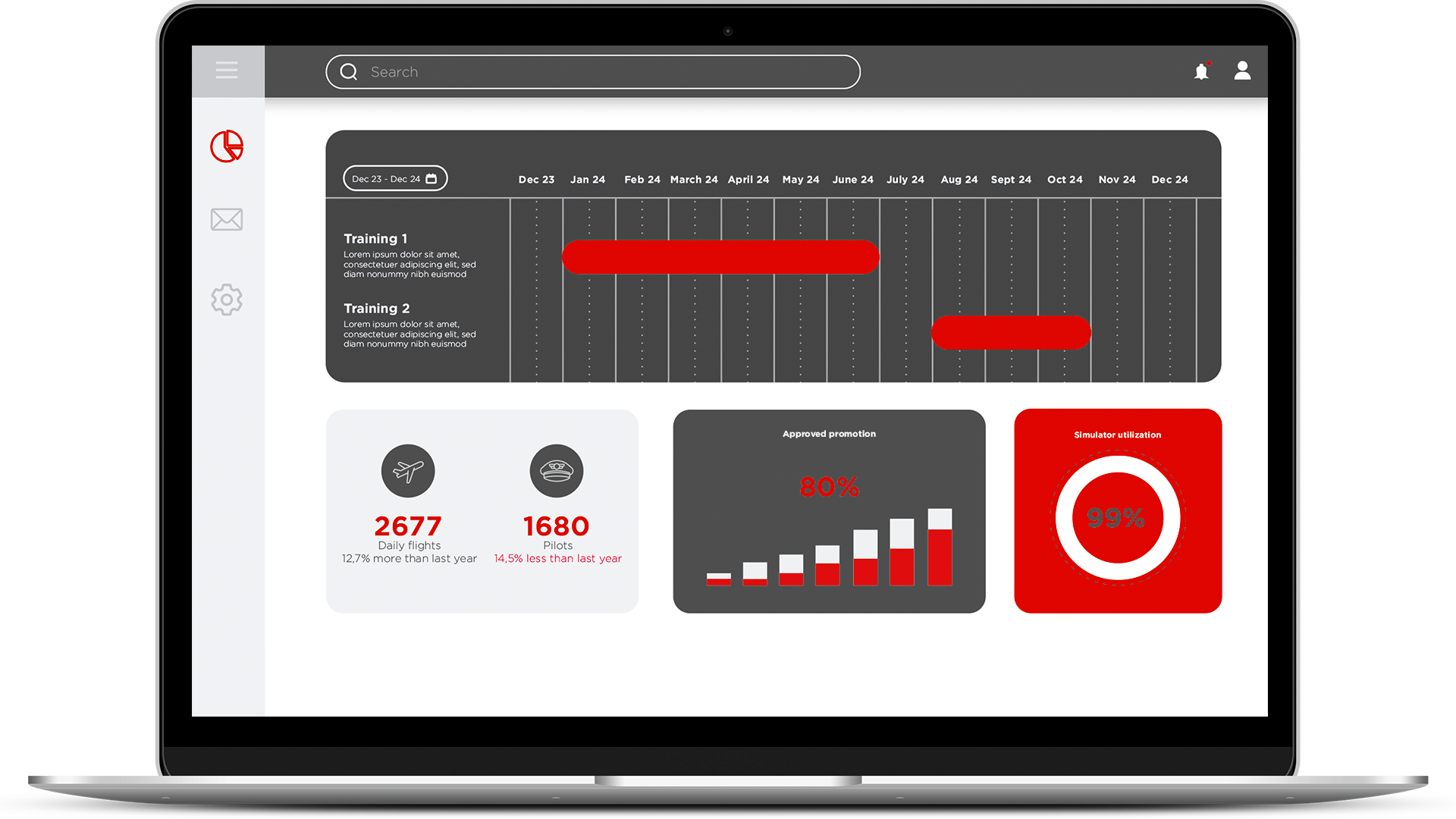
Within the aviation industry, airlines must ensure trained pilots are available when needed, despite challenges like hiring delays, regulation changes, and shifting market demand. Traditional planning struggles to keep up with such complexity. To solve this, an AI solution was created using an optimization model that:
- Generates optimal long-term career plans for thousands of pilots based on different scenarios.
- Calculates the true cost and impact of each plan for better decision-making.
Impact:
Thanks to the AI solution, decisions that previously required 1-2 months can now be made overnight. Improved planning quality results in approximately 10% fewer shortages, 23% less surplus, and millions saved in the costs.
Practical steps to implement AI-driven Intelligent Resource Planning
While the benefits are clear, successful implementation requires a structured approach and the right expertise. Here are some practical steps:
Why expertise matters
According to McKinsey, fewer than 15% of organizations have successfully scaled AI initiatives across multiple business units. Moreover, Gartner predicts that by 2027, 25% of Enterprise Resource Planning initiatives will fail outright, citing unrealistic expectations and lack of expertise as key causes. Deploying AI solutions in an organization is not a plug-and-play experience. Success hinges on aligning with business goals, skillful execution, and bridging the gap between data science and operations. Bringing in experienced partners who understand both domains is indeed crucial for navigating these complex transformations effectively.
Final thoughts: Make the shift toward smart planning
AI-driven Intelligent Resource Planning is not a future trend, it’s today’s competitive advantage. By shifting from reactive to proactive planning, organizations can achieve greater operational efficiency, reduce costs, and empower their teams.
Want to find out how whether your organization can benefit from an AI-driven Intelligent Resource Planning? We offer an AI Ideation Workshop that serves as a powerful tool for businesses to explore and decide how to implement artificial intelligence (AI) in ways that really contribute to the organizations’ success. With more than 30 years of experience, we have an extensive track record and reusable solutions in Data & AI. We are confident in our ability to help you kickstart your AI journey!