



Insight You Can Act On: The Business Value of Explainable AI
Organizations today are surrounded by data. Think of website traffics, ad impressions, conversion rates, operational metrics, and dashboards. Yet, despite this abundance of information, many strategic decisions still feel uncertain. The challenge is not a lack of data. It is a lack of clarity.
Data alone does not drive action. Real transformation happens when information is structured, interpreted, and translated into decisions with confidence. This is where AI and advanced analytics make the difference, especially when they are explainable.
From data to decisions: how AI systems work
Artificial Intelligence is not a single tool or application. It is a system composed of multiple components that work together to turn historical data into predictions and insights.
A well-designed AI system typically includes:
This feedback loop of collect – predict – act – learn is the foundation of modern AI systems.
So, what is the problem?
From conversational assistants like ChatGPT to self-driving cars and the algorithms shaping what we see on social media, most AI systems work much like a high-tech factory. Data are constantly delivered inside. The system processes those inputs, assembles internal models, and produces an output: a prediction, recommendation, or decision. That output is then sent back into the real world, where user behavior becomes the next shipment of raw material. The production line never stops.
Many of today’s most powerful AI models, particularly deep neural networks, can be incredibly precise. Yet, they operate like black-box machinery. In certain settings, such as entertainment recommendations or autonomous navigation, high performance may be enough. But in business environments, precision alone doesn’t deliver value.

In sectors like e-commerce and retail, understanding why a prediction happens is just as important as knowing what will happen. It’s useful to know a customer is likely to buy. It’s far more powerful to know what motivates that purchase. Without insight into the reasoning behind a model’s decision, businesses cannot learn from patterns, adapt their strategies, or improve outcomes.
Leaders need more than predictions, they need explanations. Without transparency, organizations cannot confidently make decisions, allocate resources, or optimize operations. That is exactly why Explainable AI (XAI) is essential.
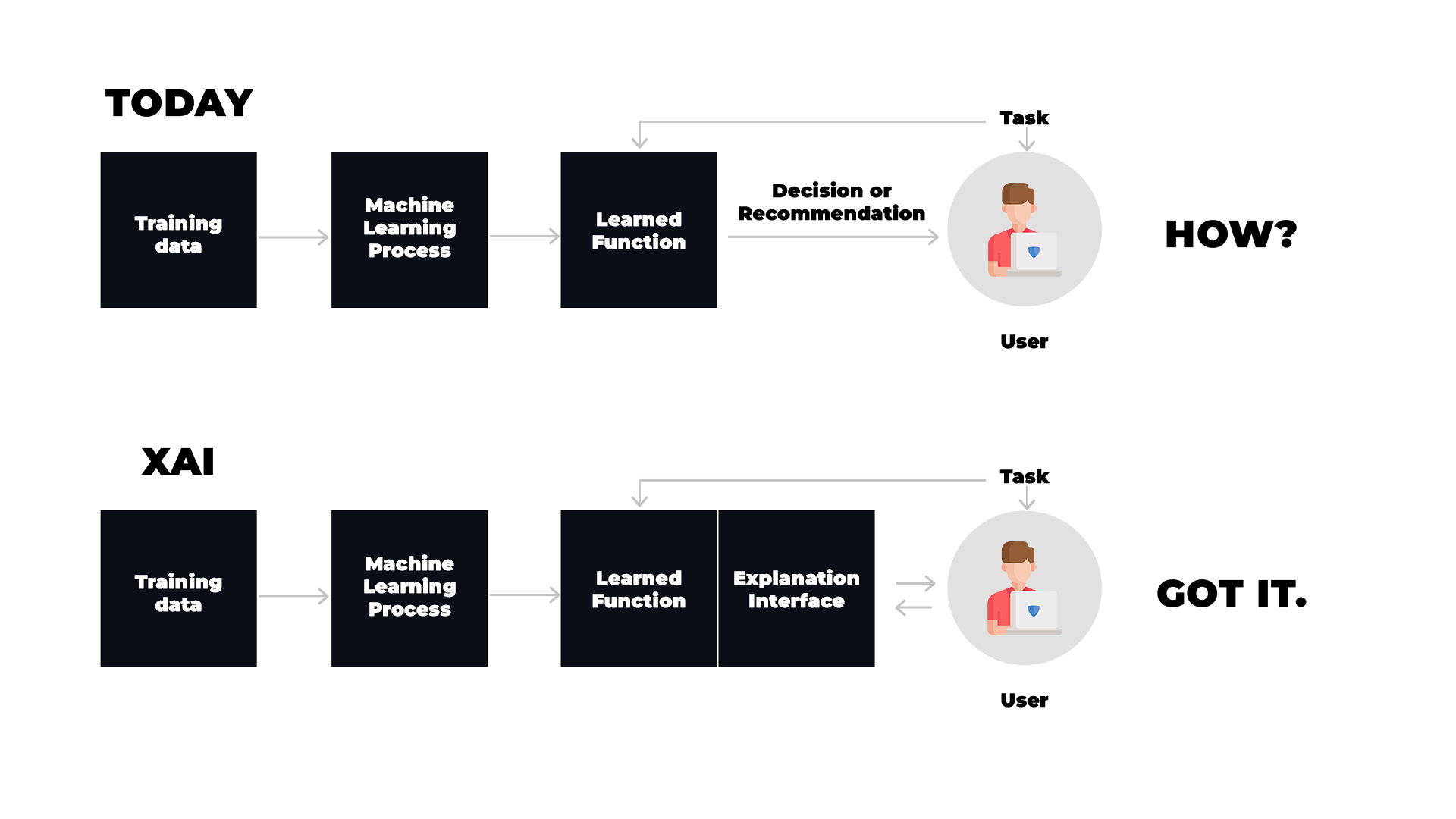
What is explainable AI?
Explainable AI is all about making model outputs clear and easy to understand. It balances strong predictive performance with interpretability, so organizations can see:
- Which factors have the biggest impact on results
- How input changes influence outcomes
- Why a particular prediction was made
- What actions could realistically change the result
These aren’t theoretical questions, they’re real business challenges with measurable answers, uncovered through explainable models. And they lead directly to action: reallocating ad spend, improving landing pages, or focusing on high-performing products. Each insight becomes a concrete step forward.
Clear explanations help answer the questions leaders care about most: which channels drive value, which pages convert, and which moves will impact revenue this quarter. Instead of acting as a black box, the model becomes a decision-support tool that reveals the reasoning behind its predictions. For business leaders, that shift is game-changing.
Knowing a customer is likely to buy is helpful. Knowing why and what can increase that likelihood is what enables real action.
The mechanics behind explainability
To build trust in AI systems, decision-makers must understand what drives predictions. Explainability techniques help answer four critical questions:
1. Which factors matter most?
Feature importance analysis ranks variables by their influence on outcomes, highlighting the strongest drivers.
2. How do probabilities change?
By analyzing how predicted outcomes vary across different values of a factor, organizations can identify thresholds or nonlinear effects.
3. Why did this specific prediction occur?
Individual-level explanations show which inputs increased or decreased the predicted score.
4. What would change the outcome?
Scenario simulations estimate how small, realistic changes could influence results.
These techniques make the model’s reasoning visible. However, interpretation remains essential. Insights must be aligned with business context and domain expertise to translate analysis into strategy.
Applying explainable AI in practice
Explainable AI offers a bridge between technical complexity and business clarity. It creates alignment. It offers transparency without sacrificing performance. And most importantly, it gives business leaders the power not just to know, but to act.
But insight is not the destination. It is the launchpad. Once a business knows what drives purchase behavior, there are numerous ways to leverage this information to make smart business decisions. Here are some examples:
Forecasting
Predictive models can estimate future revenue, demand, or conversion volume by combining purchase likelihood with expected traffic. This supports more reliable financial and operational planning.
What-if scenarios
Strategic decisions often involve uncertainty. Scenario modeling allows organizations to simulate the potential impact of:
- Increased marketing investment
- Product portfolio changes
- Pricing adjustments
- Shifts in traffic sources
This enables leaders to evaluate consequences before committing resources.
Customer Segmentation
Not all customers behave the same way. By combining predictive modeling with segmentation, businesses can identify distinct customer profiles and understand:
- Which segments convert at higher rates
- Which factors influence each segment
- How messaging and strategy should differ
This leads to more targeted marketing, better customer experiences, and improved resource allocation.
Conclusion
Explainable AI bridges the gap between technical analytics and executive decision-making. It provides: transparency, accountability, strategic clarity, and confidence in action. It marks a shift in how organizations use data. It moves analytics beyond dashboards and predictions toward clarity, accountability, and measurable action.
In a business environment where margins are tight and competition is high, leaders cannot afford to rely on intuition alone, nor can they afford AI systems they do not understand. Transparency builds trust. Trust enables adoption. And adoption drives results.
When organizations combine predictive power with explainability, they gain more than technical capability. They gain strategic confidence. They understand which levers influence growth, where risk accumulates, and how decisions today shape performance tomorrow. That is where real competitive advantage begins!
If your organization is ready to move from insight to impact, let’s start the conversation. Contact Conclusion Intelligence to explore how explainable AI can accelerate smarter decision-making across your organization!